
Sam Slater discusses the musical composition for Saros
Composer Sam Slater discusses creating the soundtrack for Saros, focusing on the game’s unique musical identity and the integration of sound design and music.

The soundtrack for the video game Saros, released today, combines elements of dark synthesis, drone metal, manipulated voices, and heavily distorted guitars, creating an auditory experience that echoes the game’s eclipse theme. Renowned composer and producer Sam Slater, the creative mind behind the score, sought to capture the essence of the game’s world beyond merely providing a musical backdrop.
In a conversation with Sam Slater, he shared insights into the creative process and collaboration involved in crafting Carcosa’s unique musical landscape, as well as composing music for the character Arjun’s quest for Nitya. Slater described the Saros soundtrack as a complex and dark puzzle, emphasizing the challenge of establishing the score’s core identity.
Slater, along with Greg Louden, Housemarque’s Creative Director, and Joe Thwaites, Music Lead at PlayStation Studios Creative Arts, engaged in extensive discussions to pinpoint the thematic and textural elements that would define Carcosa. As a composer, Slater focuses on building a world through music, often working with early test imagery and conceptual ideas rather than a finished game product.
The collaboration between Slater and the Housemarque team involved a shared appreciation for drone metal and dark electronic music. They explored the tension between these genres, seeking to merge the organic, overdriven sounds with the pristine quality of electronic music. This collaborative process included exchanging music tracks to establish a common language for the game’s abstract musical identity.
The integration of sound design and music was a significant aspect of the project, with both teams maintaining open communication to ensure a seamless audio experience. Slater explained that sound design and music were viewed as a unified entity, with discussions on how to balance atmospheric sounds and musical elements to enhance the gaming experience.
Each game biome influenced the music composition, with visual elements of the landscape reflected in the score. For example, in the Ancient Depths level, the music features a ceramic, stone-like sound that echoes and descends, mirroring the environment.
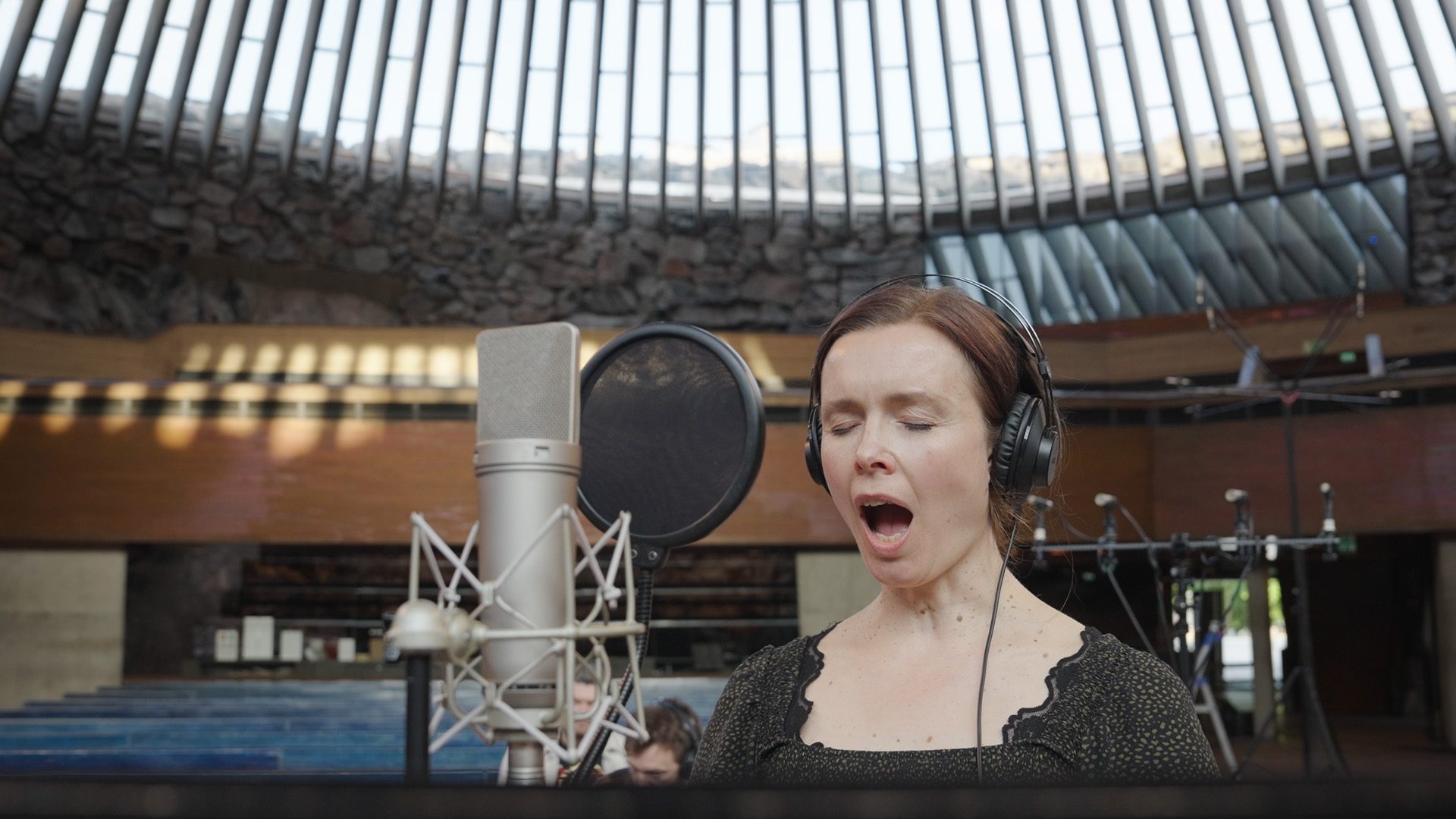
Slater also experimented with human voices, transforming them into unrecognizable sounds to create a sense of instability and otherworldliness. A notable example is the recording of experimental vocalist Rully Shabara, whose voice was manipulated to interact with a large metal sheet, generating feedback and unique sounds.
The lead track, “Sun is Forever,” originated as a theme for the character Nitya. Slater aimed to convey a sense of mystery and reassurance, with the music reflecting both love and longing, as well as the corruption and anger associated with the game’s eclipse.
Slater emphasized the importance of contrast in the score, highlighting how these musical contradictions enhance the narrative and emotional depth of the game. The Eclipse theme, characterized by overdrive and distortion, symbolizes the world’s degradation and transformation, with melodies shifting as they are consumed by the Eclipse.