
Samsung unveils groundbreaking fainting prediction technology in Galaxy Watch
Samsung has achieved a major milestone in health monitoring by successfully validating a method to predict vasovagal syncope using its Galaxy Watch6. This advancement was made possible through a joint study with Chung-Ang University Gwangmyeong Hospital.

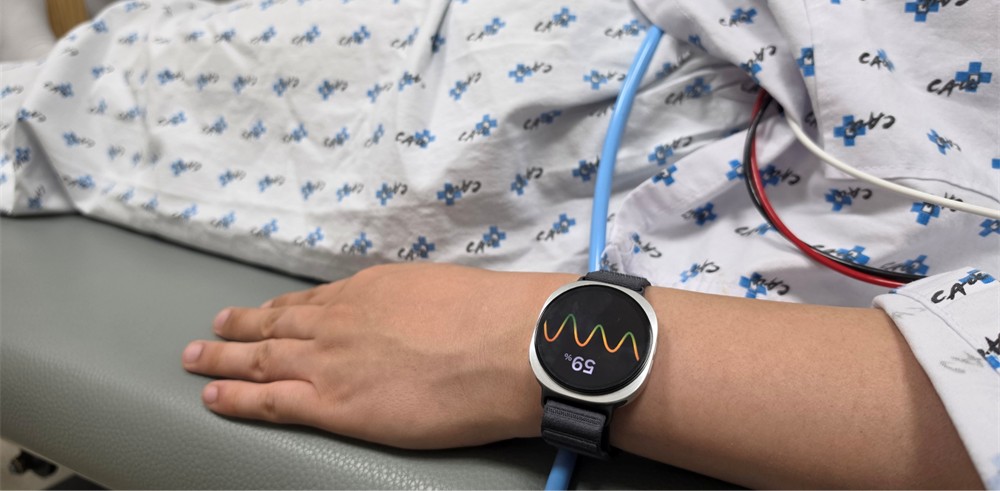
Samsung has announced a significant advancement in health monitoring technology with the successful validation of a method to predict vasovagal syncope (VVS) using the Galaxy Watch6. This breakthrough was achieved through a collaborative clinical study with Chung-Ang University Gwangmyeong Hospital in Korea.
Vasovagal syncope is a condition where an individual’s heart rate and blood pressure suddenly drop, often due to stress, leading to a temporary loss of consciousness. Although fainting episodes are not usually life-threatening, they can result in serious secondary injuries such as fractures or concussions, making early detection crucial for prevention.
Professor Junhwan Cho from the Department of Cardiology at Chung-Ang University Gwangmyeong Hospital highlighted the prevalence of this condition, noting, “Up to 40% of people experience vasovagal syncope over their lifetime, with one-third having recurrent episodes.” He emphasized the importance of early warnings, which could allow individuals to take preventive measures, reducing the risk of injury.
The research team, led by Professor Cho, evaluated 132 patients exhibiting symptoms of VVS through induced fainting tests. By employing a Galaxy Watch equipped with a photoplethysmography (PPG) sensor, the team analyzed heart rate variability (HRV) data using an AI algorithm. The study found that the model could predict fainting episodes up to five minutes before occurrence with an accuracy of 84.6%, sensitivity of 90%, and specificity of 64%.
Jongmin Choi, Head of Health R&D Group, Mobile eXperience (MX) Business at Samsung Electronics, stated, “This study exemplifies how wearable technology can transition healthcare from a ‘post-care’ to a ‘preventive care’ model. We are committed to fostering technological innovations that enable our users to lead healthier lives.”
The findings of this study were published in Volume 7, Issue 4 of the “European Heart Journal – Digital Health,” marking the first successful demonstration of a commercial smartwatch’s potential to predict syncope.
Samsung plans to continue enhancing the health monitoring features of its wearable devices and expand partnerships with leading medical institutions. Through these efforts, the company seeks to lead the digital health sector and promote the adoption of personalized, preventive health solutions.