
Samsung addresses sleep apnea to boost daily energy
Samsung is addressing sleep apnea through its Galaxy Watch series, offering innovative at-home detection features to improve sleep health and overall well-being.

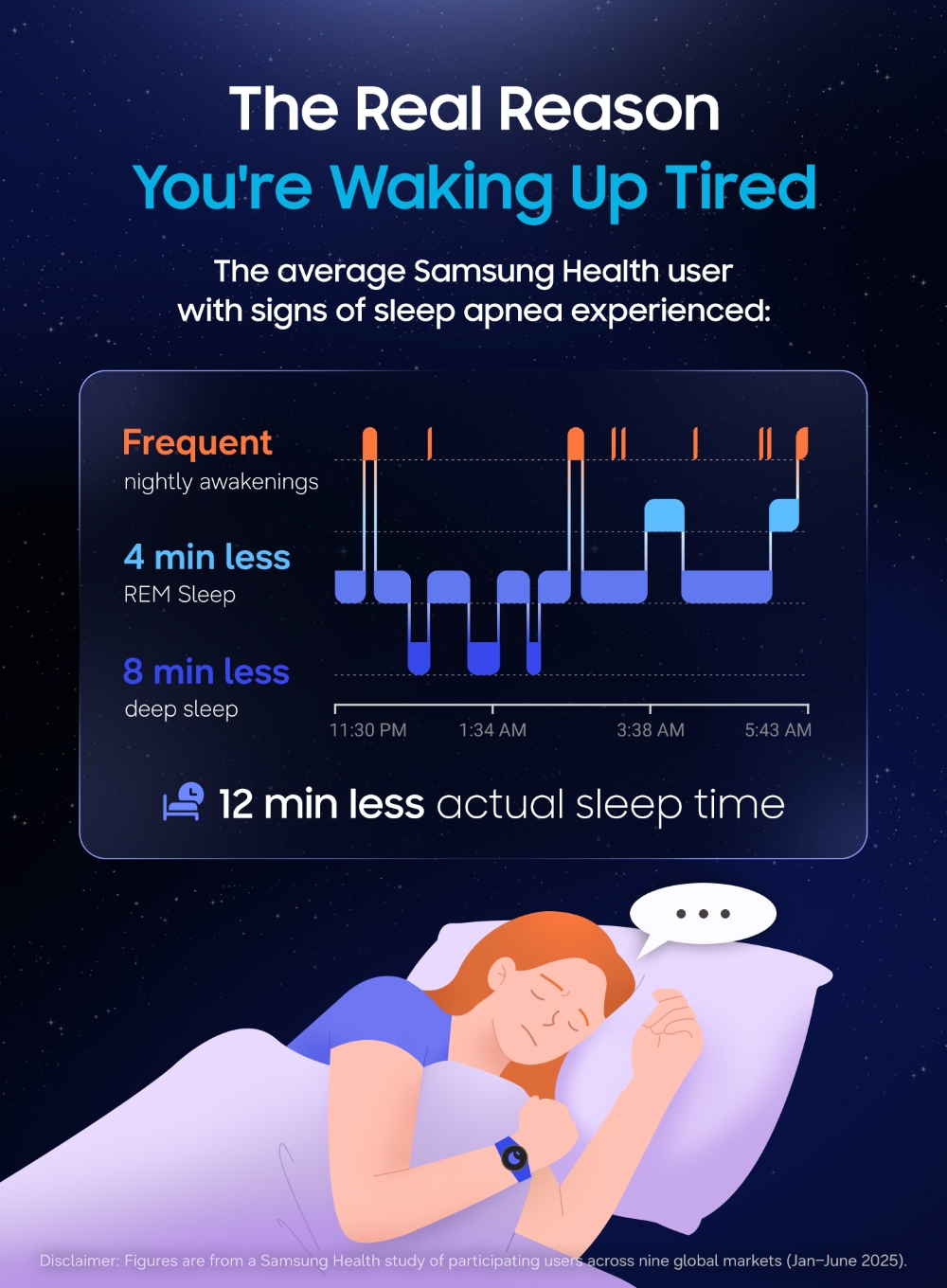
Sleep apnea affects millions globally, yet 80% of those impacted remain unaware of their condition. This serious disorder causes interruptions in breathing during sleep, potentially disrupting oxygen flow, reducing sleep quality, and contributing to health issues such as hypertension and stroke. Diagnosis often requires costly and time-consuming sleep studies in laboratories, leading to the condition being largely undiagnosed.
In recognition of World Sleep Day 2026, a comprehensive study of Samsung Health users has highlighted the prevalence of sleep apnea and its disruptive effects on sleep. In line with the World Sleep Day theme, “Sleep Well, Live Better,” Samsung Electronics is transforming the hidden symptoms of this condition into practical insights via the Galaxy Watch series, aiding those affected in enhancing their sleep habits and overall health.
Impact of Sleep Apnea on Sleep
The study revealed that 23% of participants were at risk of sleep apnea. Behavioral sleep scientist Dr. Vanessa Hill explained, “The microarousals and awakenings following breathing pauses fragment sleep. These disruptions prevent the brain from remaining in the rapid eye movement (REM) and deep sleep stages crucial for cognitive and physical restoration.”
The report demonstrated that these continuous interruptions have a direct impact on sleep duration and quality, resulting in:
- Reduced REM Sleep: Participants with moderate to severe sleep apnea indicators detected by the Galaxy Watch experienced around four minutes less REM sleep, which is vital for emotional processing and memory consolidation. Insufficient REM sleep can lead to mood instability and memory challenges.
- Less Deep Sleep: Sleep apnea sufferers also lost approximately eight minutes of deep sleep per night, a phase critical for physical restoration and immune system activation. A lack of deep sleep may result in physical exhaustion and slower recovery times.
- Frequent Nightly Awakenings: Participants showed more frequent awakenings, staying awake about four minutes longer, disrupting the sleep cycle and leading to next-day exhaustion.
- Shorter Sleep Duration: Those at higher risk of sleep apnea slept about 12 minutes less overall, significantly impacting sleep quality as cycles are fragmented.
Dr. Hill emphasized the importance of addressing sleep apnea due to its impact on multiple sleep dimensions and related health complications. Detecting the condition is crucial in mitigating its effects.
Galaxy Watch’s Role in Detecting Sleep Apnea
Samsung’s Galaxy Watch offers a pioneering Sleep Apnea feature, enabling at-home detection without the inconvenience of hospital tests. Users can track their sleep using a compatible Galaxy Watch for more than four hours over two nights within ten days. The Samsung Health Monitor app’s Sleep Apnea feature allows users to identify potential signs of the condition. Initially launched in Korea, the feature has received FDA authorization and is available in 78 markets globally.
The feature utilizes the Galaxy Watch’s BioActive Sensor to monitor blood oxygen levels and detect apnea or hypopnea. This data helps estimate the Apnea-Hypopnea Index (AHI), indicating the severity of obstructive sleep apnea (OSA). Early detection provides valuable data for medical consultations, and the Galaxy Watch also offers features like Sleep Coaching and Bedtime Guidance to promote holistic sleep health.
Dr. Hill stated, “Wearable technology like the Galaxy Watch democratizes the initial step of gathering meaningful sleep data, facilitating discussions with healthcare professionals.”
Samsung continues to innovate, enhancing the Sleep Apnea feature to offer more detailed insights, helping users prioritize rest for a healthier future.